弘顕精舎・緣起
✦ENGI — OUR STORY
A library of Buddhist texts and Dharma resources.

ORIGINS
Origins
Koken Shoja takes its spirit from the “inexhaustible lamp” of the Vimalakirti Sutra: one lamp kindles a hundred thousand lamps, the dark are all made bright, and the light is never exhausted. Hence the motto: one lamp passes to the next, and the lamps are without end.
The name Koken (弘顕) expresses a wish to carry the Dharma outward and make its meaning clear. Koken Shoja does not claim monastic authority: it organizes reliable sources so Dharma can inform everyday awareness, and studies the relation between people and dwelling through feng shui. It preserves the roots of texts, calligraphy, tea, incense, and East Asian ways of life while making them intelligible in the present.
Koken Shoja was founded in Tokyo. A physical teaching space is currently in preparation.
THE HEAD
The Founder
Kenoushin (Zhen Yingchen) is the founder of Koken Shoja.
Kenoushin (Zhen Yingchen) · legal name Zhen Peng應辰
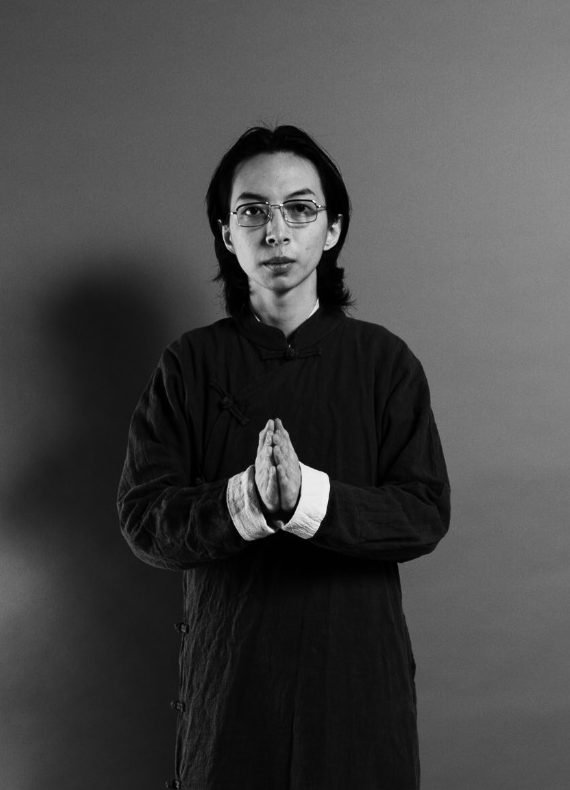
“Friends are met through letters and writing; the heart is nourished through the arts.”
- Family learning
Trained in Chinese traditional culture from childhood, within the family’s line of learning.
- Lineage
Received direct instruction from his teacher, continuing the scholarly lineage of Master Nan Huai-chin; long study of Confucian, Buddhist, and Daoist thought, grounded in the classics and joining principle with practice.
- Refuge
Took refuge in the Three Jewels; a lay Buddhist.
- Daily practice
Calligraphy, ink painting, tea, and incense — the aesthetics of East Asian daily life, practiced as routine.
- In Tokyo
Resident of Tokyo for more than a decade; long-serving cultural advisor to entrepreneurs and their families in East Asian cultivation, space, and the aesthetics of daily life.
THREE PRACTICES
Our Way
Our work comes down to four acts: reading, practice, consultation, and daily deeds.
-
Read
The Library’s five divisions. Classics read chapter by chapter, ideas traced to their source — East Asian learning conveyed in Traditional Chinese, Simplified Chinese, Japanese, and English.
Enter the Library→ -
Practice
Calligraphy, ink painting, tea ceremony, incense — small seminars and gatherings.
Enter the Gakusha→ -
Consult
Reading a dwelling, judging a chart, choosing a day. By introduction only — write first, then wait for review.
Learn about consultation→ -
Act
Shanlu, Sekkicho, Takukan, Meguri Tabi — daily practice, the ledger of merit in its modern form.
See the instruments→
Read to know your destiny; practice to cultivate yourself; ask to change your course; act to establish your life — Heaven settles one half, and we make the other.
A letter, once sent, is itself a matter of karma.
If you already have a property, a floor plan, or a specific matter in hand, describe the background and attach your materials, then write to us. After review, you will receive a reply within three days.
Submit a LetterPOSTSCRIPT
Postscript
Beyond this work, the founder keeps a small body of photographs and essays, noted here.